Intro
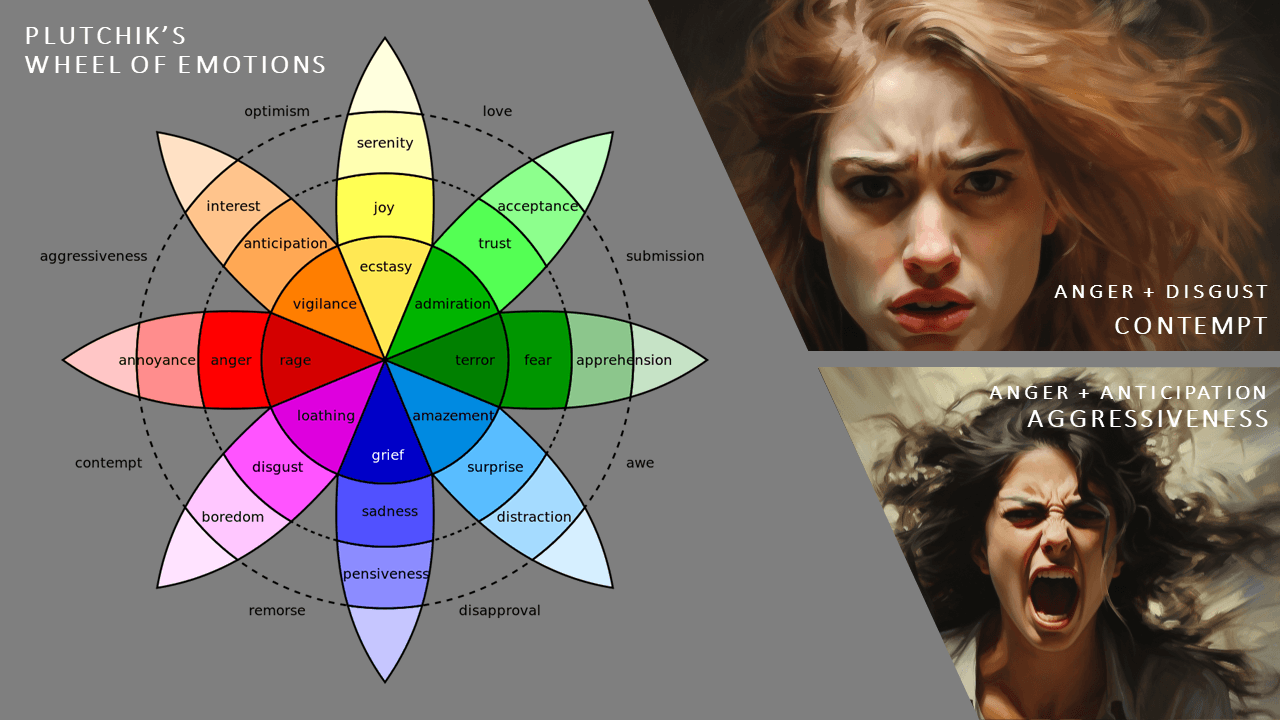
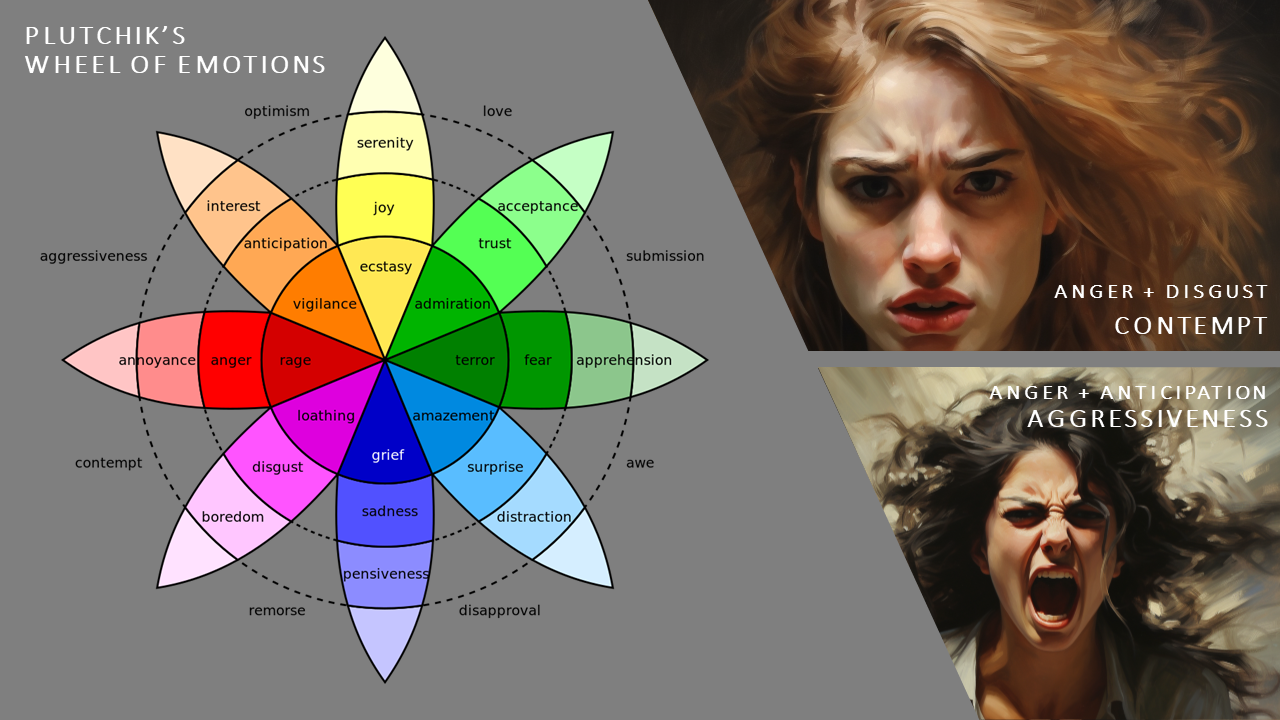
Welcome to my journey through Plutchik's Wheel of Emotions, a fascinating guide to my inner feelings. In this blog, I'm about to dive into the world of "Contempt (Anger + Disgust) and Aggressiveness (Anger + Anticipation)." What makes it exciting? I'm going to explore real-life examples of both positive and not-so-positive actions tied to these emotions (using ChatGPT). It doesn't matter whether they're usually seen as good or not – emotions are complex! Before I set sail, check out my previous blog post, "Expression and Empathy: Navigating Plutchik's Wheel of Emotions - Pairs, Intensities, and Combinations," for a quick refresher on this intriguing model.
Examples of Potential Actions
Contempt (Anger + Disgust)
Positive Actions
| Action Name | Action Brief |
|---|
| Constructive Critique | Providing constructive critique when experiencing contempt, offering a chance for growth and improvement. |
| Self-Reflection | Engaging in self-reflection to understand the source of contempt and addressing personal biases and prejudices. |
| Conflict Resolution | Using contempt as a catalyst for conflict resolution, addressing issues and fostering healthier relationships. |
| Empathy | Cultivating empathy to understand the perspectives of others when contempt arises, promoting understanding. |
| Healing Conversations | Initiating healing conversations to address contemptuous feelings and reconcile differences in relationships. |
Negative Actions
| Action Name | Action Brief |
|---|
| Toxic Judgment | Allowing contempt to fuel toxic judgments and discrimination, which can harm individuals and communities. |
| Stubbornness | Maintaining stubbornness and refusing to see the other side when contempt arises, potentially escalating conflicts. |
| Avoidance | Avoiding necessary conversations and conflict resolution when experiencing contempt, which can hinder growth. |
| Grudge Holding | Holding onto grudges and fostering long-term contempt, potentially damaging relationships and emotional well-being. |
| Sarcasm | Using sarcasm and derision as a means of expressing contempt, which can lead to negative communication patterns. |
Aggressiveness (Anger + Anticipation)
Positive Actions
| Action Name | Action Brief |
|---|
| Controlled Energy | Channeling the energy of aggression into constructive pursuits, such as sports, art, or problem-solving. |
| Assertive Communication | Employing assertive communication when dealing with anticipation-driven anger, promoting effective dialogues. |
| Conflict Resolution | Using anticipation-driven anger as motivation for conflict resolution, addressing issues and fostering growth. |
| Goal Achievement | Harnessing the drive of aggression to set and accomplish personal or professional goals, boosting achievement. |
| Self-Control | Practicing self-control and emotional regulation when anticipation fuels anger, preventing impulsive reactions. |
Negative Actions
| Action Name | Action Brief |
|---|
| Aggressive Outbursts | Allowing anticipation-driven anger to result in aggressive outbursts or physical violence, causing harm. |
| Impulsivity | Acting impulsively when experiencing anticipation-driven anger, potentially causing regrettable consequences. |
| Verbal Abuse | Using verbal abuse and hostility as a means of expressing anger driven by anticipation, harming relationships. |
| Revenge | Seeking revenge or retaliation as a response to anticipation-driven anger, leading to ongoing conflicts. |
| Stress Escalation | Allowing anticipation-driven anger to escalate stress levels, potentially impacting mental and physical health. |
Diverse avenues of exploring emotions
In this small attempt to provide examples of actions, we've explored how positive and negative feelings can lead to corresponding actions. However, emotions are multifaceted, and there are numerous ways to understand them. Beyond actions, alternative methods such as mindfulness, creative expression, journaling, open conversations, literature and film, self-assessment tools, cultural context, psychological research, literary analysis, nature's impact, and dream analysis offer diver