Intro
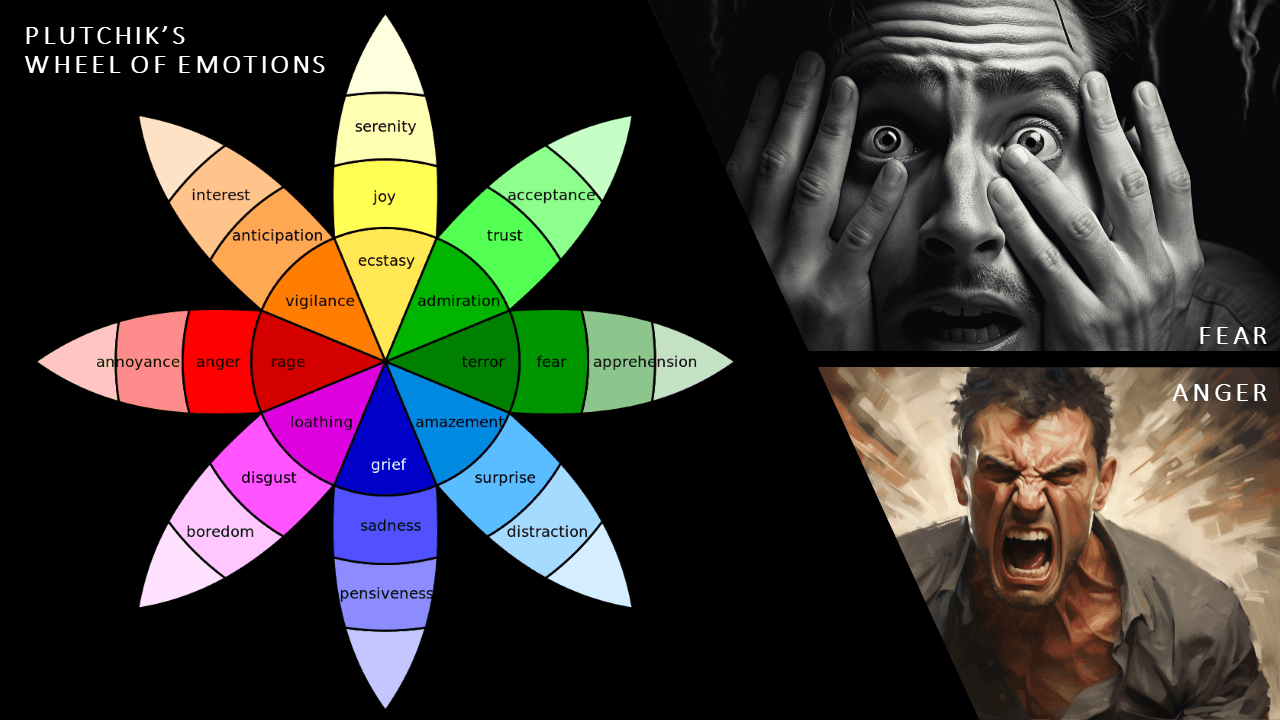
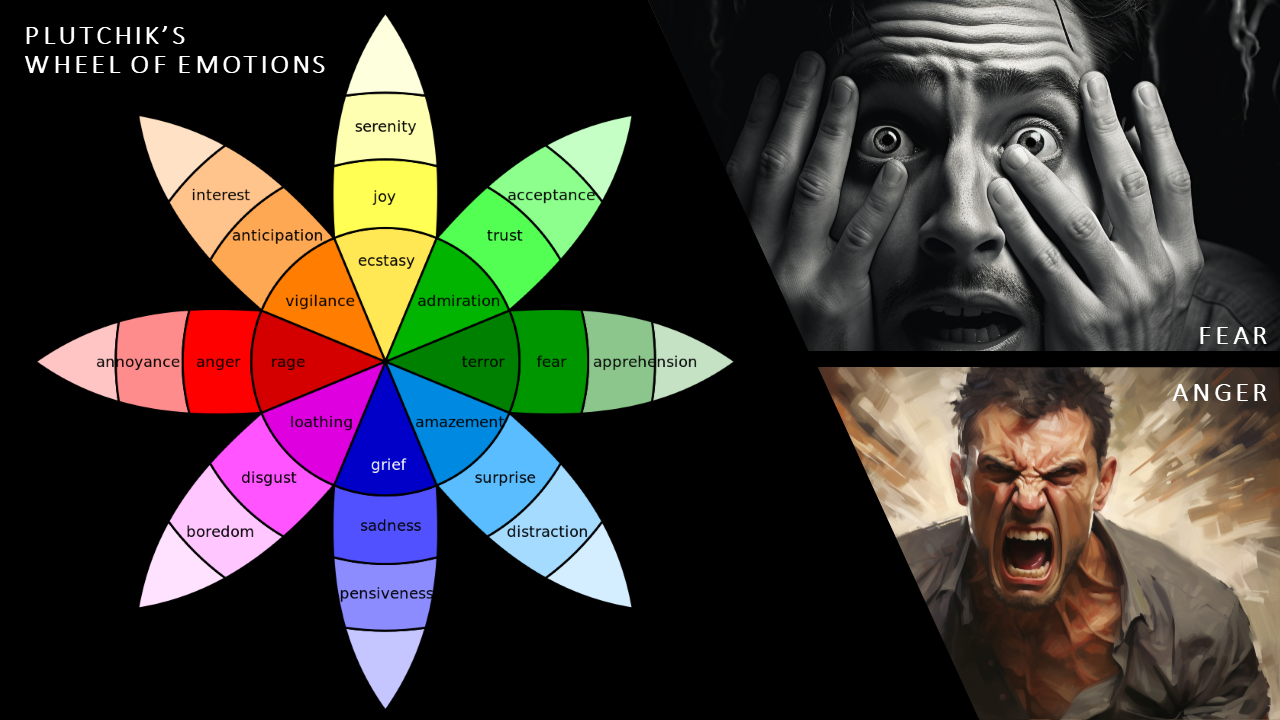
Welcome to my journey through Plutchik's Wheel of Emotions, a fascinating guide to my inner feelings. In this blog, I'm about to dive into the world of "Fear Vs. Anger." What makes it exciting? I'm going to explore real-life examples of both positive and not-so-positive actions tied to these emotions (using ChatGPT). It doesn't matter whether they're usually seen as good or not – emotions are complex! Before I set sail, check out my previous blog post, "Expression and Empathy: Navigating Plutchik's Wheel of Emotions - Pairs, Intensities, and Combinations," for a quick refresher on this intriguing model.
Examples of Potential Actions
Fear
Positive Actions
| Action Name | Action Brief |
|---|
| Caution | Exercising caution and prudence in potentially risky situations, promoting safety and well-being. |
| Seeking Support | Seeking support and guidance from trusted individuals or professionals when facing fears, fostering resilience. |
| Facing Fears Gradually | Gradually confronting and desensitizing to fears through exposure therapy, facilitating personal growth. |
| Mindfulness | Practicing mindfulness to stay present and manage anxiety, enhancing emotional awareness and control. |
| Learning and Growth | Viewing fears as opportunities for learning and personal growth, leading to increased resilience. |
Negative Actions
| Action Name | Action Brief |
|---|
| Avoidance | Avoiding situations or challenges that trigger fear, potentially hindering personal growth and emotional development. |
| Panic | Reacting with panic or irrational behaviors when confronted with fear, which can lead to unnecessary distress. |
| Denial | Denying the existence of fears or avoiding acknowledgment, preventing constructive coping and resolution. |
| Escapism | Using unhealthy means such as substance abuse to escape fears temporarily, which can lead to further issues. |
| Self-Sabotage | Sabotaging personal goals and opportunities due to fear-based self-doubt, potentially limiting life experiences. |
Anger
Positive Actions
| Action Name | Action Brief |
|---|
| Assertive Communication | Expressing anger assertively and constructively, addressing issues while maintaining respect and healthy boundaries. |
| Problem Solving | Channeling anger into problem-solving and conflict resolution, leading to productive outcomes and understanding. |
| Self-Control | Practicing self-control and emotional regulation when angry, promoting effective communication and conflict management. |
| Forgiveness | Utilizing anger as a catalyst for forgiveness and personal growth, letting go of grudges and fostering inner peace. |
| Advocacy | Advocating for positive change and justice when anger is directed at societal or systemic issues, driving progress. |
Negative Actions
| Action Name | Action Brief |
|---|
| Aggression | Reacting with aggression or hostility when angry, potentially causing harm to oneself or others. |
| Suppression | Suppressing anger without healthy expression, which can lead to emotional build-up and explosive outbursts. |
| Blame Game | Blaming others without constructive dialogue when angry, perpetuating conflicts and hindering resolution. |
| Passive Aggression | Resorting to passive-aggressive behaviors instead of open communication when angry, causing misunderstandings. |
| Holding Grudges | Holding onto anger and grudges over an extended period, negatively impacting mental and emotional well-being. |
Diverse avenues of exploring emotions
In this small attempt to provide examples of actions, we've explored how positive and negative feelings can lead to corresponding actions. However, emotions are multifaceted, and there are numerous ways to understand them. Beyond actions, alternative methods such as mindfulness, creative expression, journaling, open conversations, literature and film, self-assessment tools, cultural context, psychological research, literary analysis, nature's impact, and dream analysis offer diverse insights into the complex world of emotions. These methods provide a rich tapestry of approaches to navigate and comprehend our emotional landscape.