Intro
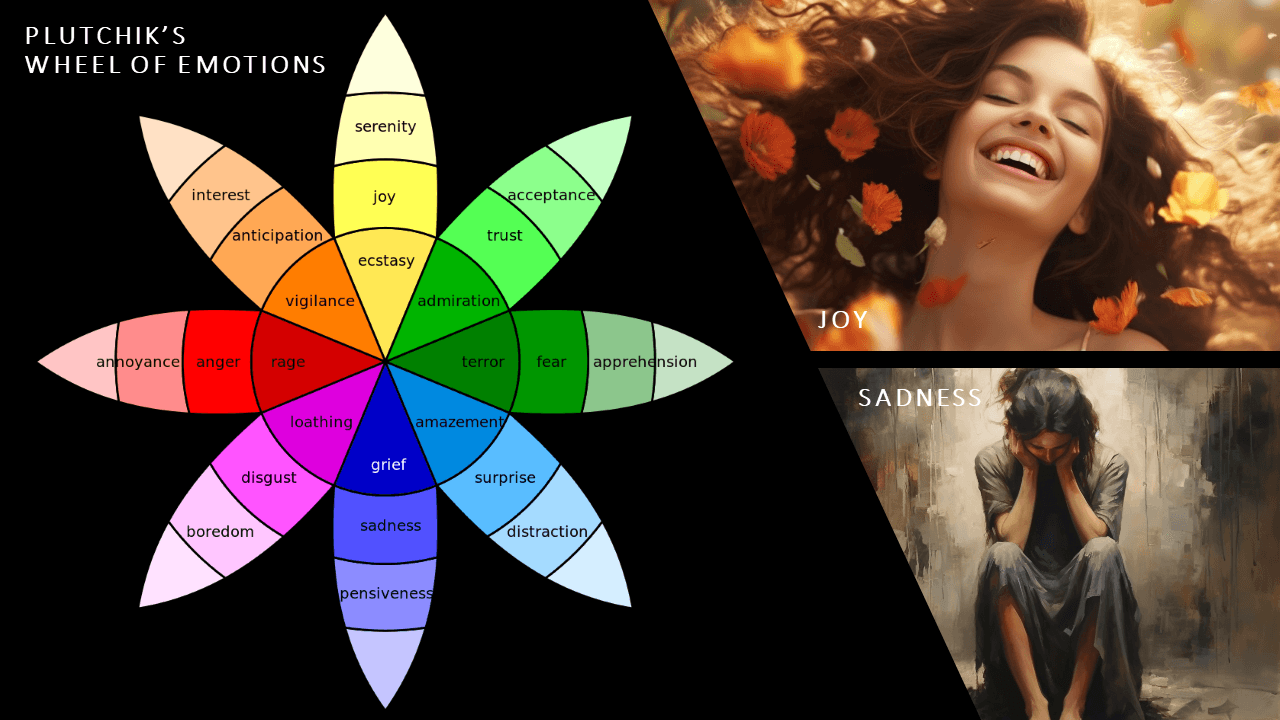
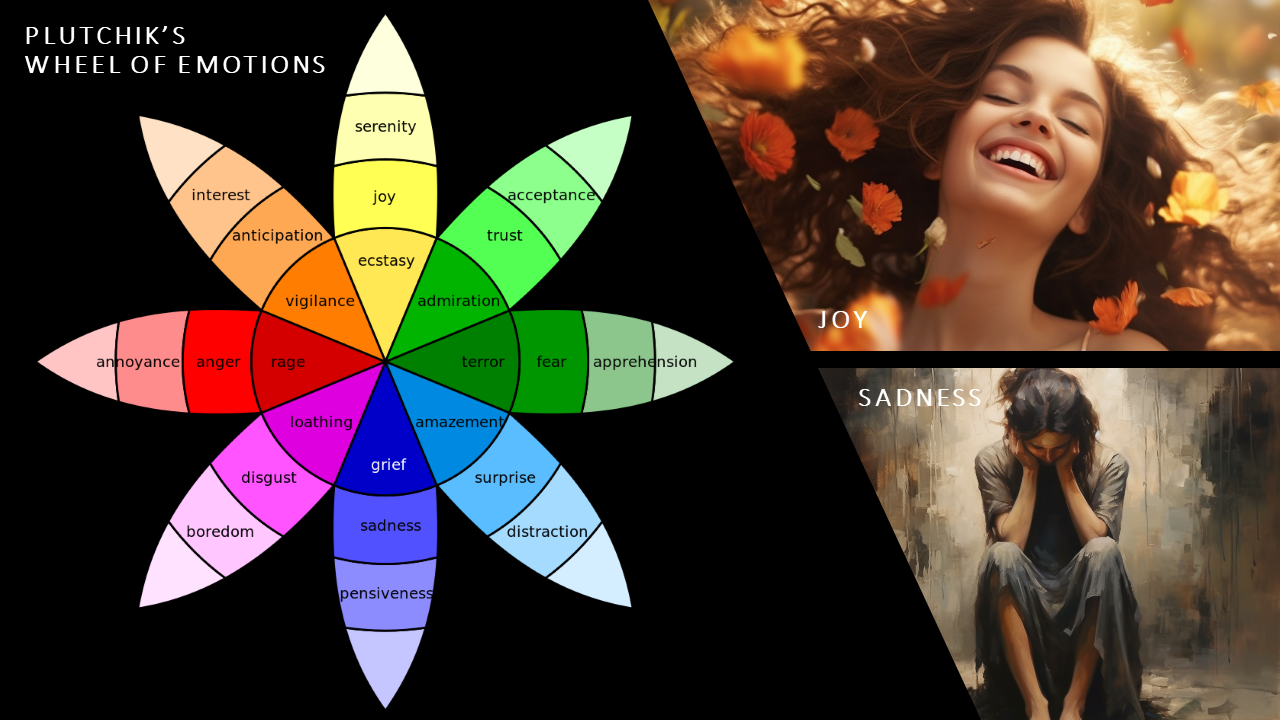
Welcome to my journey through Plutchik's Wheel of Emotions, a fascinating guide to my inner feelings. In this blog, I'm about to dive into the world of "Joy vs. Sadness." What makes it exciting? I'm going to explore real-life examples of both positive and not-so-positive actions tied to these emotions (using ChatGPT). It doesn't matter whether they're usually seen as good or not – emotions are complex! Before I set sail, check out my previous blog post, "Expression and Empathy: Navigating Plutchik's Wheel of Emotions - Pairs, Intensities, and Combinations," for a quick refresher on this intriguing model.
Examples of Potential Actions
Joy
Positive Actions
| Action Name | Action Brief |
|---|
| Celebrating Achievements | Embracing joy by acknowledging and celebrating personal and professional accomplishments. |
| Acts of Kindness | Spreading joy by performing acts of kindness and generosity toward others. |
| Fostering Optimism | Cultivating a positive outlook on life, which helps in dealing with adversity and maintaining mental well-being. |
| Sharing Joy | Sharing moments of joy with loved ones and building stronger connections, reinforcing the positive aspects of relationships. |
| Pursuing Passions | Engaging in hobbies and activities that genuinely bring joy and fulfillment. |
Negative Actions
| Action Name | Action Brief |
|---|
| Hedonistic Pursuits | Succumbing to excessive hedonism and overindulgence in pursuit of pleasure, which can lead to fleeting happiness and long-term dissatisfaction. |
| Ignoring Responsibilities | Allowing joy to overshadow responsibilities and commitments, potentially leading to neglect of important duties. |
| Escapism | Using unhealthy means such as substance abuse or excessive distractions to escape negative emotions, which can be detrimental in the long run. |
| Overindulgence | Overindulging in pleasures to the extent that it leads to negative consequences, such as health issues or financial problems. |
| Avoiding Challenges | Avoiding necessary challenges or opportunities due to fear of encountering sadness, potentially limiting personal development. |
Sadness
Positive Actions
| Action Name | Action Brief |
|---|
| Seeking Support | Turning to friends, family, or professional therapists for emotional support during times of sadness, facilitating healing and growth. |
| Self-Reflection | Reflecting on the source of sadness to identify opportunities for personal growth and resilience. |
| Creative Outlet | Channeling sadness into creative outlets like art or writing, providing a healthy means of emotional expression. |
| Empathy | Using personal experiences of sadness to empathize with others experiencing similar emotions, creating a sense of connection and understanding. |
| Learning from Pain | Using moments of sadness as opportunities for personal reflection and growth, ultimately leading to increased resilience. |
Negative Actions
| Action Name | Action Brief |
|---|
| Self-Pity | Succumbing to self-pity and dwelling on negative thoughts, which can deepen feelings of sadness and hinder progress. |
| Avoidance | Avoiding necessary challenges or opportunities due to fear of encountering sadness, potentially limiting personal development. |
| Holding Grudges | Holding onto grudges and refusing to let go of negative emotions, which can strain relationships and hinder emotional healing. |
| Emotional Suppression | Suppressing sadness to the point where it becomes chronic, potentially leading to mental health issues like depression. |
| Resisting Growth | Allowing sadness to become a barrier to personal growth and positive change. |
Diverse avenues of exploring emotions
In this small attempt to provide examples of actions, we've explored how positive and negative feelings can lead to corresponding actions. However, emotions are multifaceted, and there are numerous ways to understand them. Beyond actions, alternative methods such as mindfulness, creative expression, journaling, open conversations, literature and film, self-assessment tools, cultural context, psychological research, literary analysis, nature's impact, and dream analysis offer diverse insights into the complex world of emotions. These methods provide a rich tapestry of approaches to navigate and comprehend our emotional landscape.