Pose and Composure: Navigating the Replication Crisis in Psychology Experiments! 🔬🧩

Intro
In the realm of psychological science, replication is the bedrock of credibility and validity. However, the field currently faces a significant challenge: the replication crisis. This term refers to the difficulty in replicating the results of previous scientific experiments, casting shadows of doubt over widely accepted concepts. One prominent example that encapsulates this crisis is the theory of "power posing."
Psychology Experiments
Original Study: Carney, Cuddy, and Yap (2010)
The study posited that adopting high-power poses would lead to psychological, physiological, and behavioral changes consistent with increased power, as opposed to low-power poses. (Reference)
Methods of Testing the Outcome
42 participants were randomly assigned to assume and hold either high-power or low-power poses for one minute. Then, they completed various tasks, including a gambling task, and provided saliva samples for hormone analysis.
Outcome and Interpretation
The researchers found that high-power poses led to increased feelings of power, higher risk-taking behavior in the gambling task, increased testosterone levels, and decreased cortisol levels. These findings suggested that our body posture can influence our mind and feelings of power.
Replication Attempts: A Comparative Analysis of Power Posing Studies
| Study | About the Experiment | Methods of Testing the Outcome | Outcome and Interpretation | Reference |
|---|---|---|---|---|
| Ranehill et al. (2015) | Replication of Carney, Cuddy, and Yap (2010) with more participants and controls | 200 participants; similar to original plus a control group | Power posing influenced feelings of power but not hormones or significant behavior changes | Link |
| Garrison, Tang, and Schmeichel (2016) | Examined power posing's effect on executive functioning | 247 participants; standard cognitive tasks after high/low/neutral power poses | No evidence that power posing affected executive functioning | Link |
| Cesario and McDonald (2017) | Meta-analysis of over 30 power posing studies | Analysis of cumulative study results | Effects of power posing were non-existent or too minor to be reliable | Link |
| Simmons and Simonsohn (2017) | Re-analysis of popular media-cited power posing studies | "p-curve analysis" of statistical likelihood of effects | Reported effects in original studies likely to be untrue, suggesting minimal or no real effects of power posing | Link |
All references got from ChatGPT (then searched on Google with DOI or Article Title)
Beyond the Pose: Future Directions in Research
-
Contextual Factors: Exploring how cultural backgrounds or different settings influence power posing effects.
-
Individual Differences: Investigating the role of personality traits or self-esteem in the effectiveness of power poses.
-
Mechanisms of Action: Using advanced tools like fMRI to understand the neural activities underlying power posing.
-
Long-term Effects: Studying the potential long-term psychological effects of regular power posing.
-
Alternative Theories: Considering other theories for how power posing might impact psychological states, beyond hormones and risk-taking.
-
Broader Outcomes: Assessing if power poses influence diverse outcomes like creativity, negotiation success, or pain tolerance.
Conclusion
The journey of power posing through the peaks of viral popularity to the valleys of scrutinized replication illuminates the broader replication crisis in psychology. It underscores the necessity for rigorous, transparent, and replicable science. As we step into the future, the lessons learned from these experiences are not just about a specific pose or a field of study, but about the continuous pursuit of truth in science, which often isn't as straightforward or glamorous as a superhero stance.
Midjourney Prompt with inputs from ChatGPT
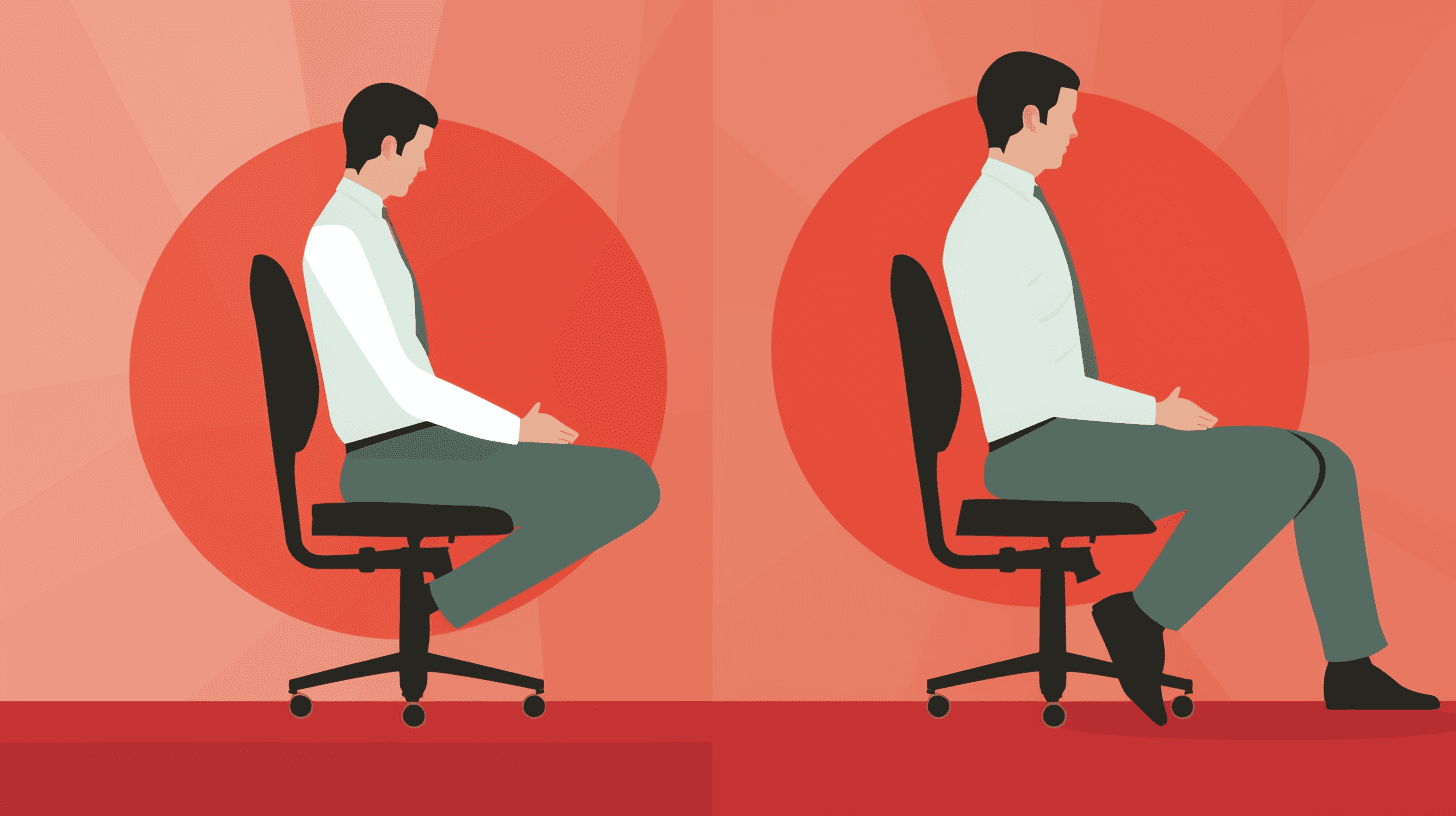
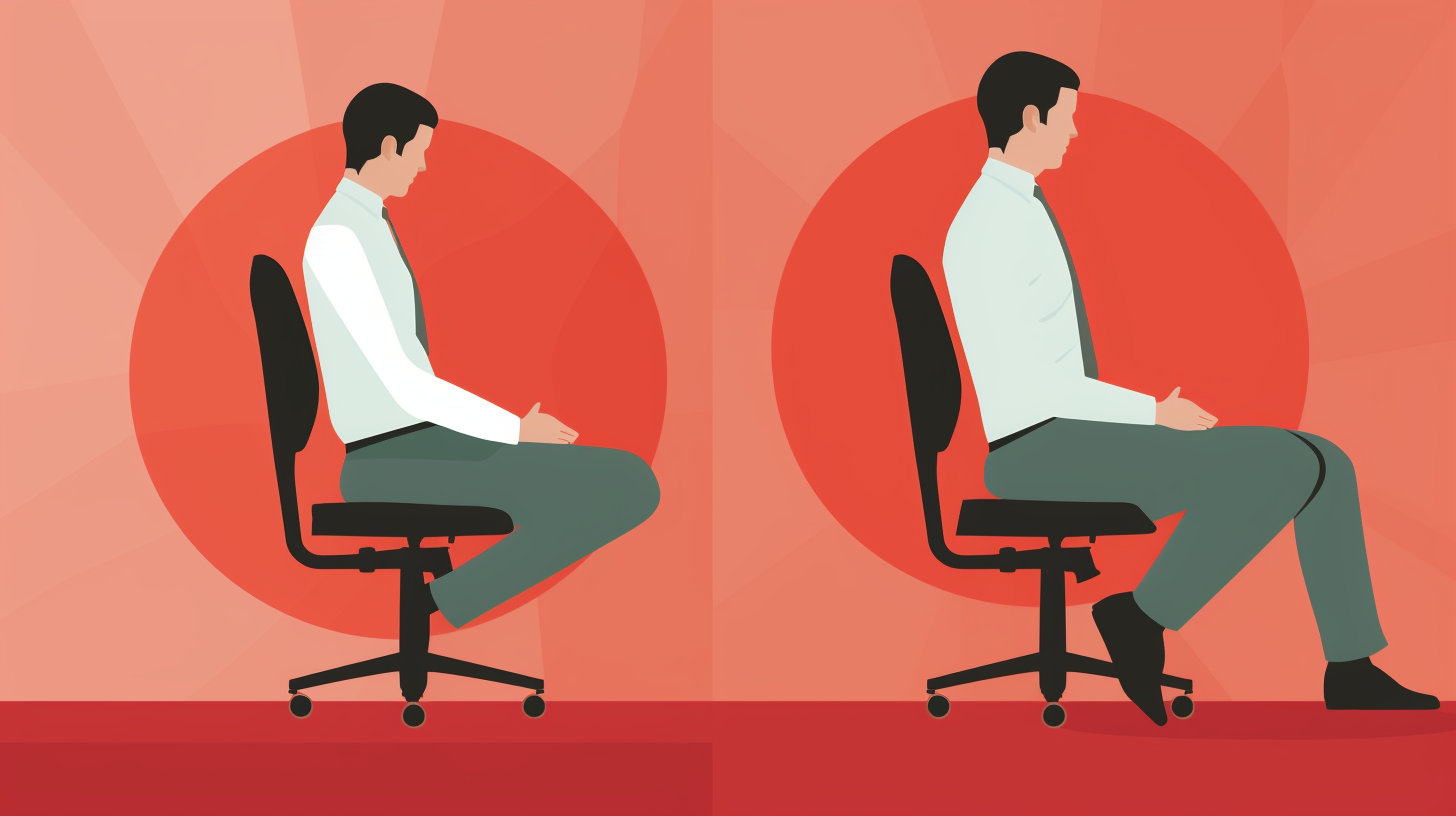
A split-image illustration featuring the same male individual sitting in an office chair: on the left, he sits with a hunched posture, arms closed, and eyes downcast, embodying a lack of confidence; on the right, he sits upright with a straight back and open shoulders, exuding confidence, showcasing the visual contrast between low-power and high-power poses in a professional setting. --ar 16:9