Intro
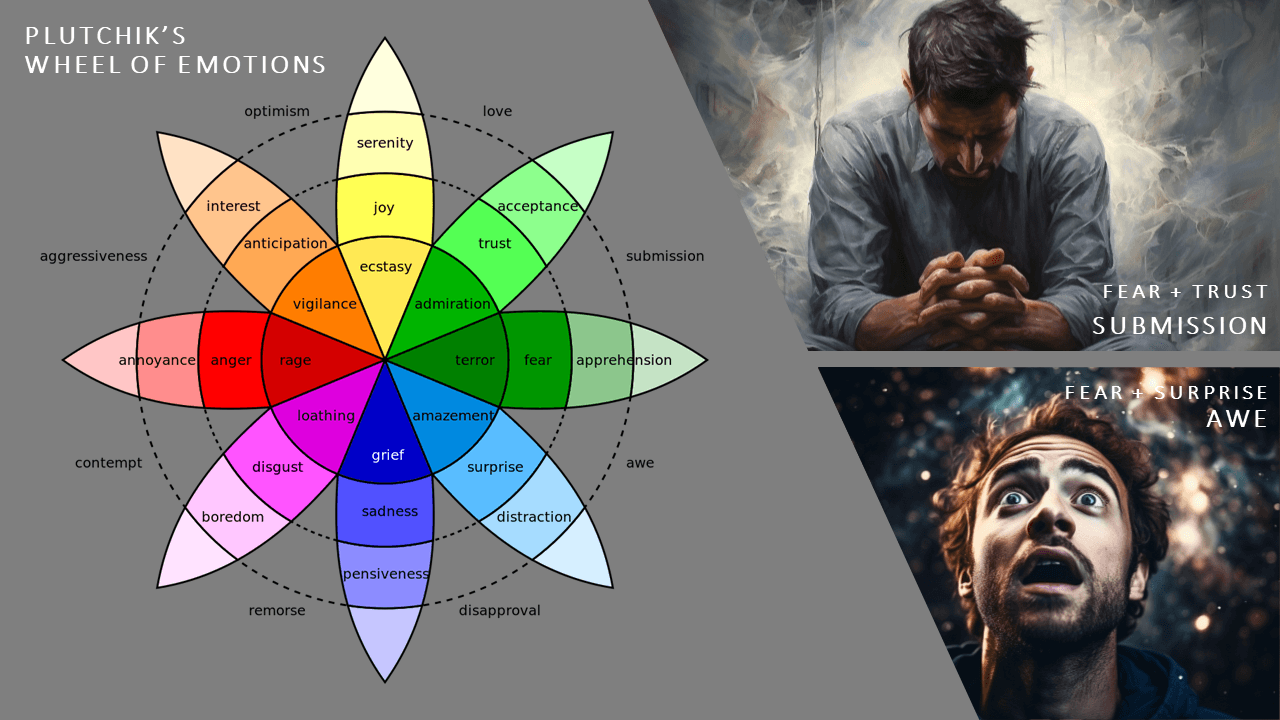
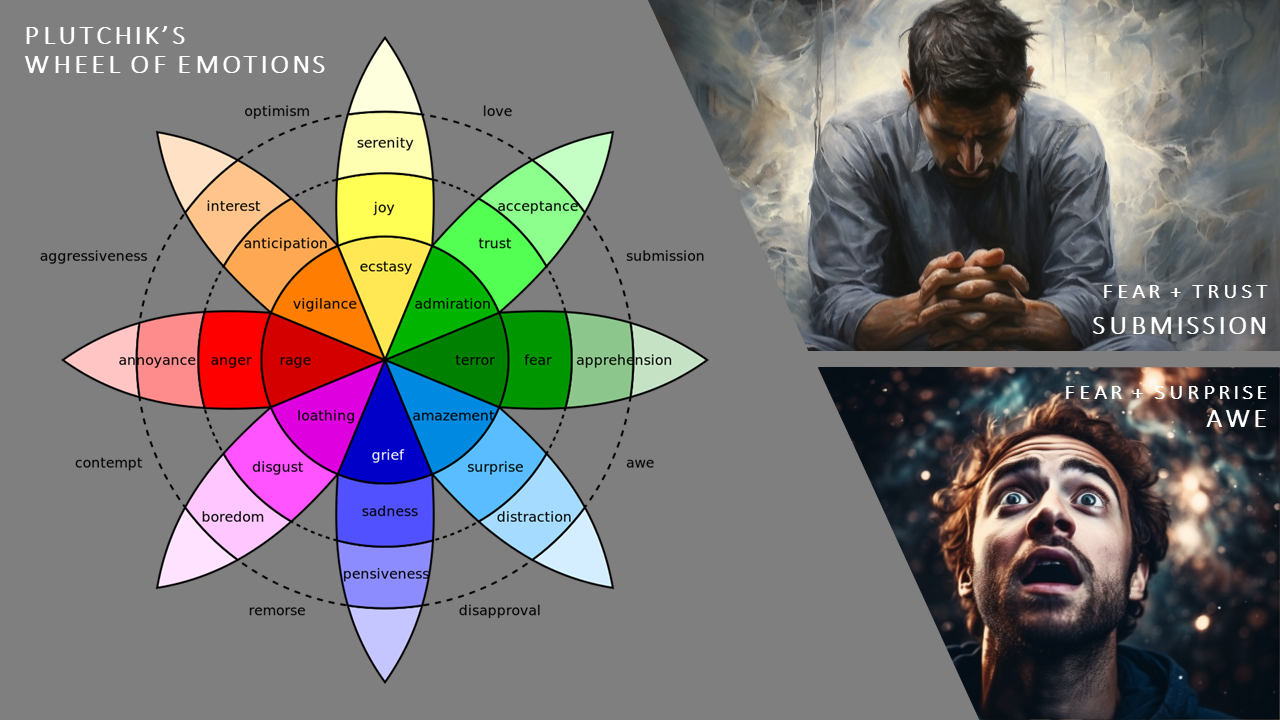
Welcome to my journey through Plutchik's Wheel of Emotions, a fascinating guide to my inner feelings. In this blog, I'm about to dive into the world of "Submission (Fear + Trust) and Awe (Fear + Surprise)." What makes it exciting? I'm going to explore real-life examples of both positive and not-so-positive actions tied to these emotions (using ChatGPT). It doesn't matter whether they're usually seen as good or not – emotions are complex! Before I set sail, check out my previous blog post, "Expression and Empathy: Navigating Plutchik's Wheel of Emotions - Pairs, Intensities, and Combinations," for a quick refresher on this intriguing model.
Examples of Potential Actions
Submission (Fear + Trust)
Positive Actions
| Action Name | Action Brief |
|---|
| Trusting Surrender | Engaging in trusting surrender when facing challenges, allowing for personal growth and resilience. |
| Cooperation | Collaborating and cooperating with others in a spirit of trust, promoting teamwork and unity. |
| Open Communication | Fostering open communication and vulnerability in trusting relationships, deepening connections. |
| Willingness to Learn | Maintaining a willingness to learn and adapt in a trustful environment, fostering personal growth. |
| Empathy | Cultivating empathy and understanding in trust-based interactions, strengthening emotional bonds. |
Negative Actions
| Action Name | Action Brief |
|---|
| Blind Obedience | Succumbing to blind obedience in trustful situations, potentially leading to a loss of autonomy. |
| Naive Trust | Trusting blindly without discernment, which may result in vulnerability to manipulation or harm. |
| Dependency | Developing unhealthy dependency on trust, potentially hindering personal growth and self-reliance. |
| Ignoring Boundaries | Neglecting personal boundaries in trusting relationships, which can lead to discomfort or harm. |
| Overcommitment | Overcommitting to the expectations of trust, potentially causing stress and personal neglect. |
Awe (Fear + Surprise)
Positive Actions
| Action Name | Action Brief |
|---|
| Appreciation | Expressing deep appreciation and wonder in response to awe-inspiring experiences, fostering gratitude. |
| Connection | Feeling a profound sense of connection to the world and humanity when experiencing awe, promoting empathy. |
| Mindful Presence | Practicing mindful presence and savoring the moment during awe-inspiring encounters, enhancing well-being. |
| Inspiration | Drawing inspiration and motivation from moments of awe, leading to creativity and personal growth. |
| Reflective Wonder | Encouraging reflective wonder and curiosity in response to awe, deepening understanding and insight. |
Negative Actions
| Action Name | Action Brief |
|---|
| Overwhelm | Becoming overwhelmed by feelings of fear and surprise during awe, potentially leading to anxiety or distress. |
| Disconnect | Feeling a disconnect or isolation from the world and others when experiencing awe, hindering a sense of belonging. |
| Numbness | Reacting to awe with emotional numbness or indifference, potentially missing out on the transformative power of awe. |
| Avoidance | Avoiding awe-inducing experiences out of fear or discomfort, missing opportunities for personal growth and inspiration. |
| Skepticism | Responding to moments of awe with skepticism and disbelief, potentially dismissing valuable insights and experiences. |
Diverse avenues of exploring emotions
In this small attempt to provide examples of actions, we've explored how positive and negative feelings can lead to corresponding actions. However, emotions are multifaceted, and there are numerous ways to understand them. Beyond actions, alternative methods such as mindfulness, creative expression, journaling, open conversations, literature and film, self-assessment tools, cultural context, psychological research, literary analysis, nature's impact, and dream analysis offer diver