Intro
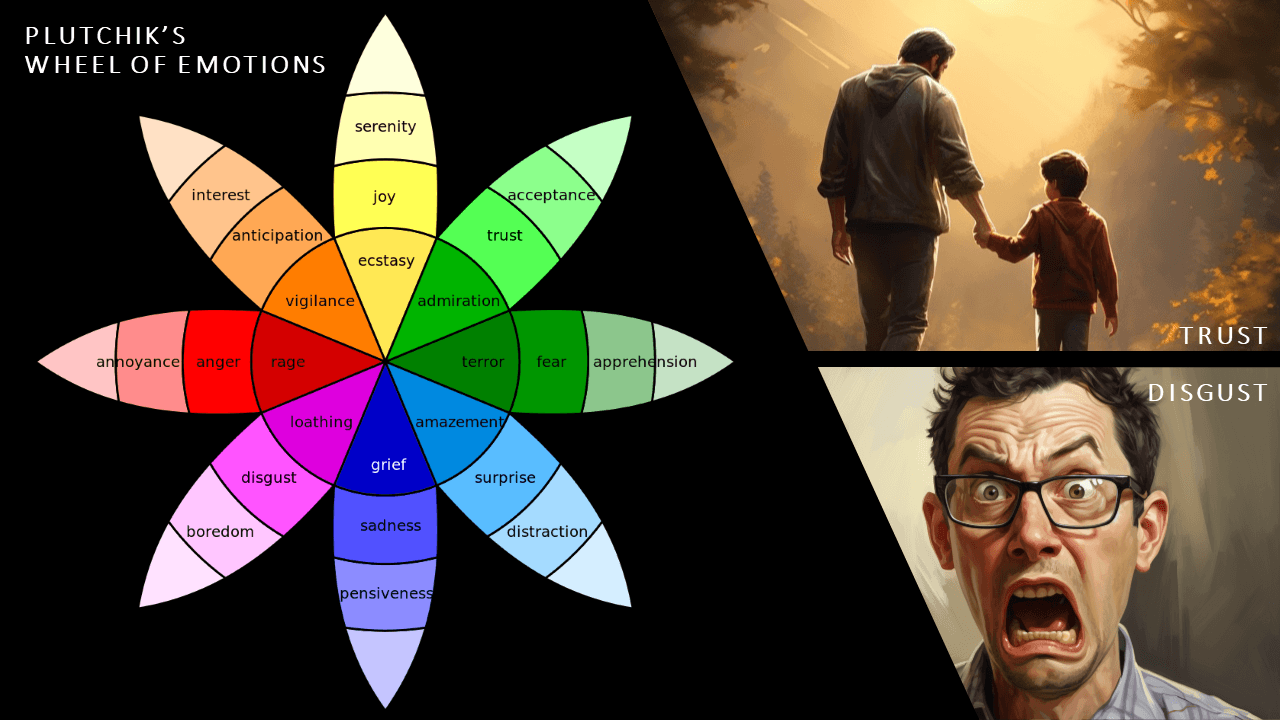
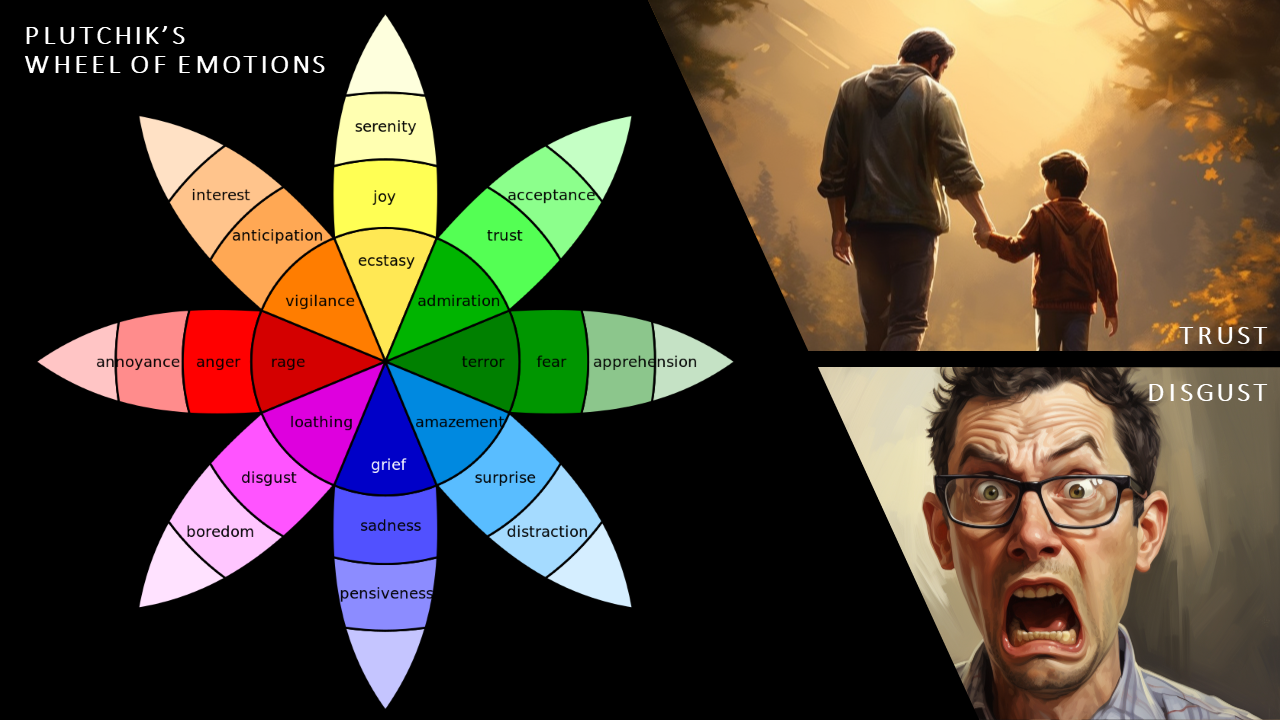
Welcome to my journey through Plutchik's Wheel of Emotions, a fascinating guide to my inner feelings. In this blog, I'm about to dive into the world of "Trust vs. Disgust." What makes it exciting? I'm going to explore real-life examples of both positive and not-so-positive actions tied to these emotions (using ChatGPT). It doesn't matter whether they're usually seen as good or not – emotions are complex! Before I set sail, check out my previous blog post, "Expression and Empathy: Navigating Plutchik's Wheel of Emotions - Pairs, Intensities, and Combinations," for a quick refresher on this intriguing model.
Examples of Potential Actions
Trust
Positive Actions
| Action Name | Action Brief |
|---|
| Building Relationships | Nurturing trust by establishing genuine connections with others, fostering a sense of security and rapport. |
| Open Communication | Promoting trust through honest and transparent communication, which cultivates mutual understanding. |
| Demonstrating Reliability | Earning trust by consistently delivering on promises and commitments, building a foundation of reliability. |
| Showing Empathy | Fostering trust by demonstrating empathy and understanding towards the emotions and perspectives of others. |
| Sharing Vulnerability | Strengthening trust by sharing personal vulnerabilities and creating an environment of mutual openness. |
Negative Actions
| Action Name | Action Brief |
|---|
| Betraying Trust | Destroying trust through actions that betray the confidence and expectations of others. |
| Deceptive Behavior | Undermining trust by engaging in deceptive behavior, such as lying or concealing important information. |
| Violating Boundaries | Eroding trust by disregarding personal boundaries and causing discomfort or harm to others. |
| Manipulative Intent | Diminishing trust through manipulative intentions aimed at personal gain rather than mutual benefit. |
| Displaying Distrust | Weakening trust by consistently displaying distrust towards others, creating a hostile atmosphere. |
Disgust
Positive Actions
| Action Name | Action Brief |
|---|
| Maintaining Hygiene | Utilizing disgust as a motivator for maintaining personal hygiene and cleanliness, promoting well-being. |
| Avoiding Harmful Substances | Using disgust to steer clear of harmful substances or situations, safeguarding one's health and safety. |
| Promoting Moral Values | Harnessing disgust to reinforce moral values and ethical behavior, upholding societal norms and standards. |
| Encouraging Healthy Choices | Employing disgust to encourage healthy lifestyle choices, such as avoiding junk food or excessive consumption. |
| Fostering Safe Environments | Using disgust to identify potential hazards and take measures to create safer surroundings. |
Negative Actions
| Action Name | Action Brief |
|---|
| Disregarding Hygiene | Allowing disgust to lead to neglect of personal hygiene, resulting in health risks and social discomfort. |
| Encountering Harmful Substances | Succumbing to the allure of harmful substances or behaviors despite feeling disgust, leading to detrimental consequences. |
| Ignoring Moral Values | Suppressing feelings of disgust to engage in unethical or immoral actions, compromising personal integrity and societal norms. |
| Unhealthy Indulgence | Overcoming disgust to indulge in unhealthy habits or substances, disregarding the associated risks and health consequences. |
| Creating Unsafe Environments | Ignoring feelings of disgust and neglecting safety measures, potentially leading to hazardous conditions in one's surroundings. |
Diverse avenues of exploring emotions
In this small attempt to provide examples of actions, we've explored how positive and negative feelings can lead to corresponding actions. However, emotions are multifaceted, and there are numerous ways to understand them. Beyond actions, alternative methods such as mindfulness, creative expression, journaling, open conversations, literature and film, self-assessment tools, cultural context, psychological research, literary analysis, nature's impact, and dream analysis offer diverse insights into the complex world of emotions. These methods provide a rich tapestry of approaches to navigate and comprehend our emotional landscape.